
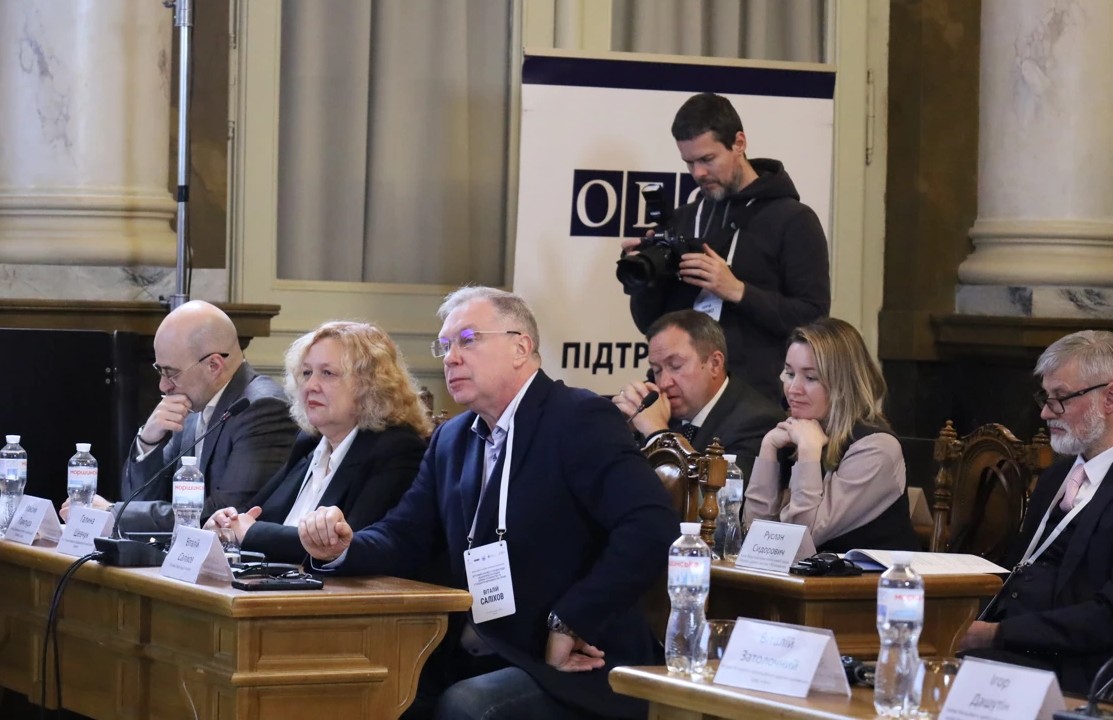
On 13 November 2026, Lviv hosted the international academic and practical conference “Artificial Intelligence in the Administration of Justice: Judicial Independence, Public Trust and Rule of Law Standards”. Halyna Shevchuk, Acting Chairman of the High Qualification Commission of Judges of Ukraine, and Ruslan Sydorovych, a member of the Commission, participated in the event.
The conference brought together judges, representatives of European and international institutions, academics and legal experts to exchange experience and explore the challenges facing the judiciary amid rapid technological development.
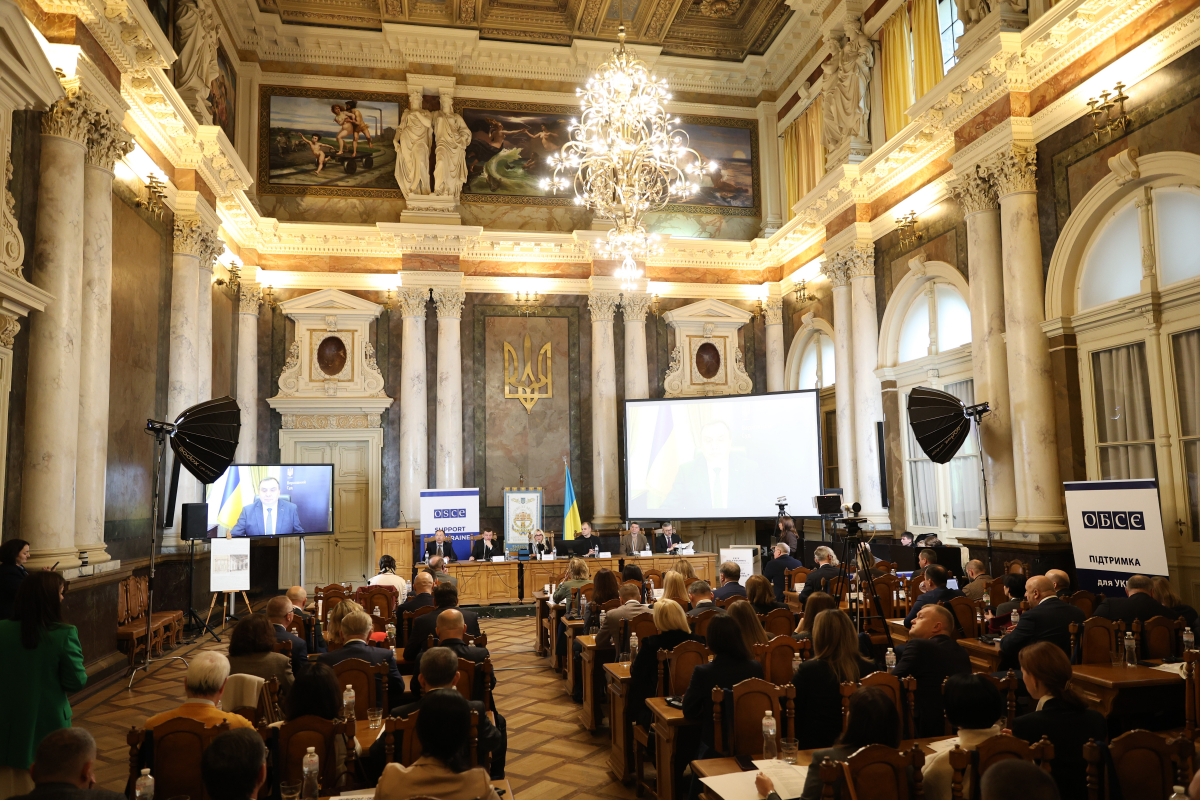
Welcoming remarks were delivered by Stanislav Kravchenko, President of the Supreme Court; Ihor Dashutin, President of the Administrative Court of Cassation within the Supreme Court; Hryhorii Usyk, Chairman of the High Council of Justice; Vitalii Salikhov, Chairman of the Council of Judges of Ukraine; Maksym Pampura, Head of the State Judicial Administration of Ukraine; Liudmyla Kravchenko, Deputy Minister of Justice of Ukraine; Karel Šimka, President of the Supreme Administrative Court of the Czech Republic; Petr Mareš, Special Representative of the OSCE Chairperson-in-Office and OSCE Project Co-ordinator in Ukraine; Vitalii Zatolochnyi, President of the Eighth Administrative Court of Appeal, and his deputy, Oleh Zaverukha; Yurii Voloshyn, Head of the Office of the European Public Law Organization in Ukraine; Oleksandr Paseniuk, President of the All-Ukrainian Association of Administrative Judges; Andrii Hodyk, First Deputy Head of the Lviv Regional Military Administration; and Nataliia Shakhovska, Rector of Lviv Polytechnic National University.

In her welcoming remarks to the conference participants, Halyna Shevchuk emphasised that modern technologies, particularly artificial intelligence, can serve as effective tools to support judges in their work. They help process legal information more quickly, organise documents, analyse large volumes of data and streamline professional workflows.
At the same time, she stressed that the use of such tools must have clear limits: no technology should replace judges’ independent judgement, influence their assessment of evidence or assume judicial functions.
Halyna Shevchuk also noted that this issue is particularly relevant to the HQCJ, whose representatives were directly involved in updating the Code of Judicial Ethics and preparing its Commentary. In particular, Article 16 of the Code addresses the use of artificial intelligence in judicial work.
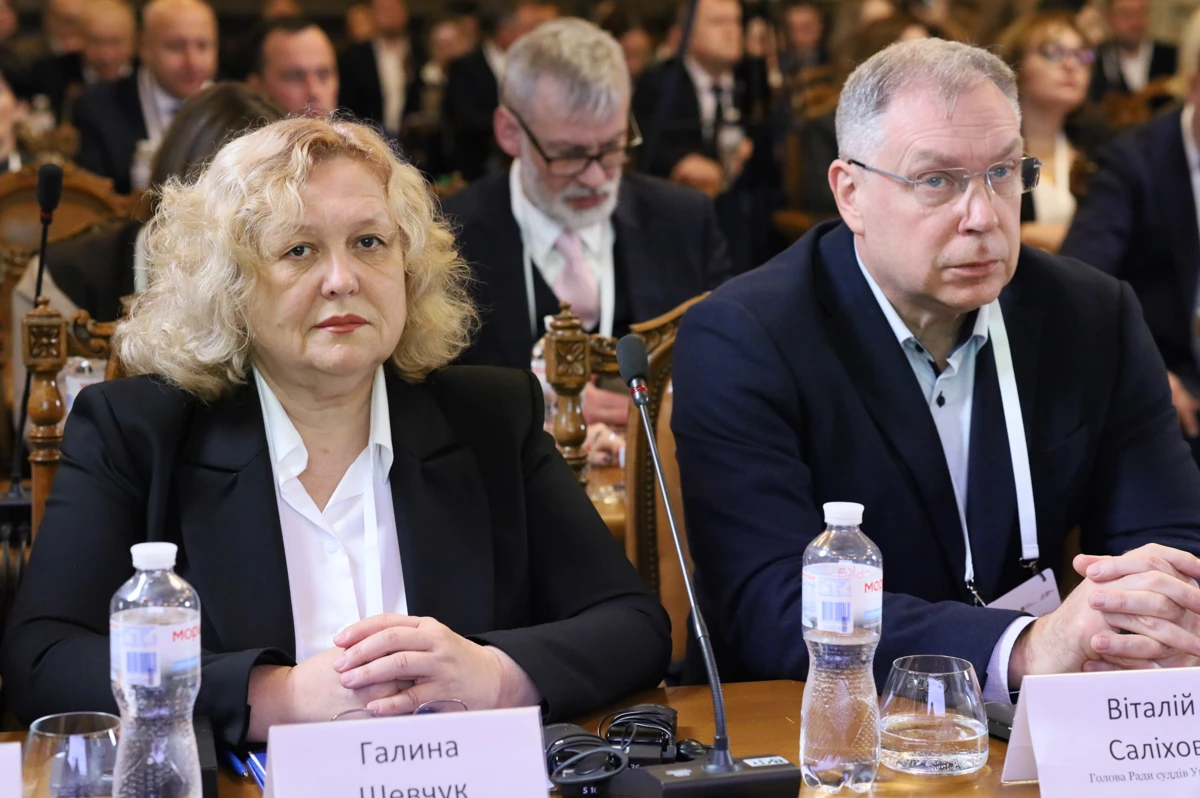
In Halyna Shevchuk’s view, integrating artificial intelligence into the judicial system must be accompanied not only by the introduction of new digital tools but also by the development of appropriate ethical standards, professional competencies and effective mechanisms for human oversight.
Commission member Ruslan Sydorovych delivered a presentation entitled “Moral Dilemmas in Shaping Judicial Discretion in the Age of AI Assistants”. He highlighted the importance of assessing AI assistants not merely as a technology but also as a phenomenon that influences how society as a whole, including the judiciary, thinks.
Ruslan Sydorovych emphasised that, in today’s environment, such digital assistants inevitably affect the cognitive processes of both participants in judicial proceedings and judges, particularly their approaches to resolving the moral dilemmas that judges inevitably face, especially in complex cases. He also stressed the importance of assessing not only the use of existing AI assistants in the administration of justice retrospectively, but also their potential future impact, taking into account the rapid pace of technological development and the extent of AI assistant adoption among younger generations.

The conference focused on European and international standards for the use of artificial intelligence in the administration of justice, safeguards for human oversight of judicial decision-making, the transparency of algorithmic systems and accountability for their use. Participants discussed the impact of digital technologies on public trust in the courts, as well as the legal aspects of using artificial intelligence in taxation and the resolution of tax disputes.
An important component of the conference was the exchange of international experience in the digital transformation of judicial proceedings. Across three thematic sessions, participants examined international human rights standards and safeguards for judicial independence, practices concerning the use of artificial intelligence in European courts, and the specific aspects of its application in public administration. Experts from the United Kingdom, Italy, the Netherlands, Finland, Austria, Lithuania, Ireland, Portugal, Germany, Slovakia and other European countries contributed to the discussions.
The event was organised by the Supreme Court, the All-Ukrainian Association of Administrative Judges, Lviv Polytechnic National University and the Eighth Administrative Court of Appeal, with the support of the Organization for Security and Co-operation in Europe (OSCE).
 Джерело фото: ВС, НУЛП, ЛОДА